Landscape Design Principles: From Site Analysis to Planting Plans
A good design starts with an analysis of the site's actual conditions, not with choosing plants. We review the key stages of landscape design.
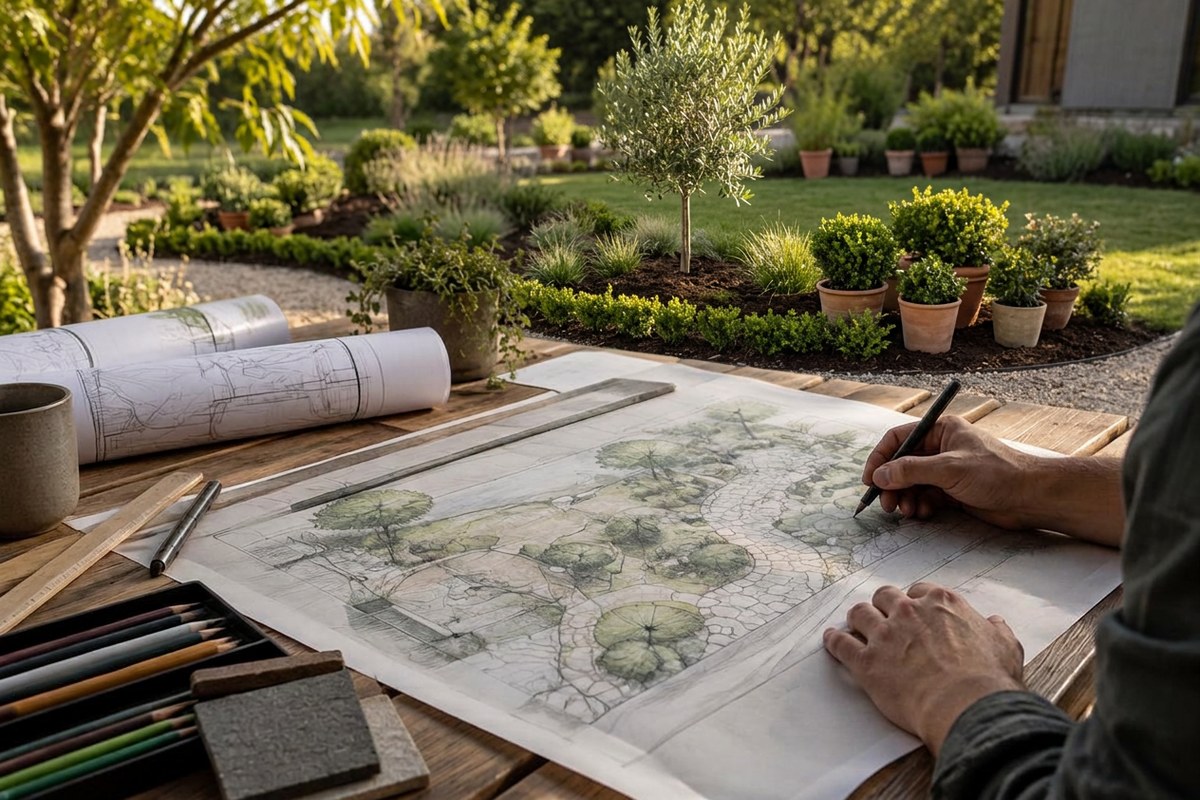
Landscape design is a step-by-step process that begins with understanding the site. Sunlight direction, soil type and depth, access to water, prevailing winds and how residents use the space are all assessed before the first line is drawn.
Site Analysis
Site analysis identifies which areas receive full sun, morning sun or permanent shade. This assessment alone significantly narrows the range of suitable plants and prevents costly planting mistakes.
Concept and Spatial Geometry
After the analysis, the geometry of the space is defined: circulation routes, seating areas, open surfaces and planting masses. In minimalist design, a small number of carefully chosen elements produces a better result than excessive variety.
The Planting Plan
The planting plan arranges species according to their mature height, growth rate, water requirements and leaf texture. Grouping plants with similar water needs forms the basis for irrigation zoning in the next stage.